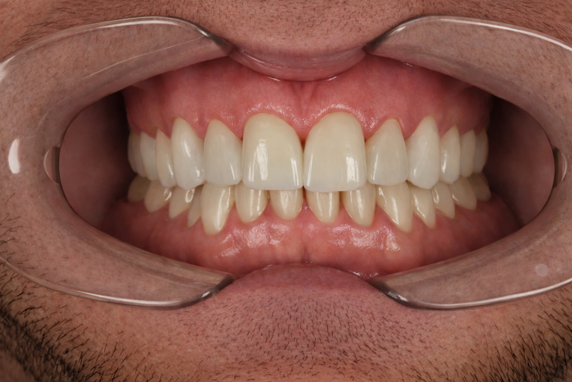
Case Study Full Mouth Rehab TMJ & Worn Teeth

Full Mouth Rehab Case Study

Rebuilding a worn, collapsed bite

Decades of grinding had worn Julie's teeth down and brought on TMJ pain and migraines. Dr. Monil Mehta tested a new bite first, then rebuilt all 28 teeth in about two months here in Chanhassen, MN.

Case SummaryChanhassen, MN

What is full mouth rehabilitation, and why did Julie need it?

Full mouth rehabilitation rebuilds most or all of the teeth in one or both arches so they work together as a healthy, stable system. Julie needed it because decades of grinding had worn her teeth down and collapsed her bite. Her jaw joint couldn't seat properly, which drove her TMJ pain and migraines. Every tooth had to be rebuilt to a new, tested bite position.

Treatment
Full mouth functional and aesthetic rehabilitation
Teeth treated
All 28 (both arches)
Restorations
Bonded lithium disilicate overlays and veneers; zirconia on second molars and lower first molars
Planning
Kois deprogrammer, digital smile design, CBCT, trial smile
Visits
8 total (3 treatment, 5 planning and records)
Treatment time
About 2 months
Comfort
Oral conscious sedation
Completed
2025
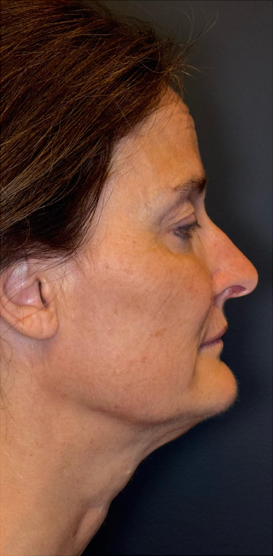
Julie's side profile after full mouth rehabilitation, Chanhassen MN
28 Teeth rebuilt

Julie's StoryDecades of TMJ Pain

Years of grinding, TMJ pain and repairs that never lasted

Julie lived with grinding, clenching and TMJ pain for decades. The pain often came with headaches and migraines. She tried nearly everything, and some of it helped for a while, but none of it lasted.

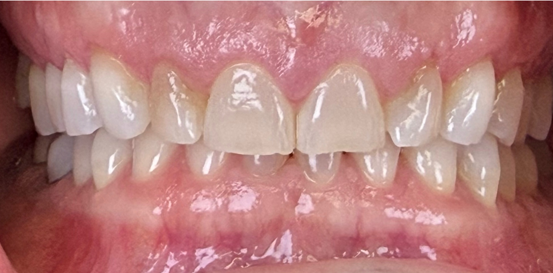
In the last few years the damage started to show. Cracked back teeth needed crowns and root canals. Her front teeth were chipping and getting noticeably shorter. Each repair fixed one tooth but left the cause untouched. By then she had mostly accepted the pain as part of life.

Julie is also our longtime scheduling coordinator. She was here before I took over the practice, so she had watched other patients go through this process. For a couple of years she'd ask me questions in passing, and I'd explain what I thought was going on. I never pushed. This is treatment a patient has to want, not be talked into.

Dr. Monil Mehta

What she'd already tried

  • Orthodontics
  • Botox
  • TMJ specialist splints
  • Several night guards
  • Chiropractic care
  • Holistic approaches

Some helped for a while. None of it lasted.

Her biggest concerns

  • Would it actually work, after so much else hadn't?
  • How invasive and painful would it be?
  • What would it cost, after all she'd already spent?
  • Would her teeth look fake?

DiagnosisRoot Cause

What causes a collapsed bite and TMJ pain?

In Julie's case, it was a cycle. When her teeth came together, her jaw joint couldn't fully seat, so her muscles and joint were under constant strain. That strain drove her clenching and grinding, which wore her teeth down and made her bite even worse.

  1. 01

    Collapsed bite

    Worn teeth hold the jaw in the wrong position.

  2. 02

    Joint can't seat

    Muscles and the jaw joint stay under constant strain.

  3. 03

    Clenching & grinding

    Daytime clenching, nighttime grinding, TMJ pain and migraines.

  4. 04

    More wear

    Teeth wear down further, and the cycle starts over.

A cycle that kept feeding itself

The damage it left behind

Lost vertical height

The distance between her upper and lower jaws shrank, which shortened her front teeth and, without her realizing it, her face.

Cracked molars

Two back teeth cracked under the force and needed crowns and root canals.

Yellowing teeth

As enamel wore away, the yellower layer underneath began to show through.

The good news: Julie's gums were healthy and she had always kept up with her hygiene. Apart from a few recent crowns, she had very little old dental work. That made a conservative approach possible.

Test Before TreatmentKois Deprogrammer

How do you know it will work before treatment starts?

You test it first. Julie's first question was a fair one: how do I know this will work when nothing else has? So before touching a single tooth, she wore a Kois deprogrammer. It's a small removable appliance that lets the jaw muscles relax and the joint settle into a stable position. If it didn't help, she could take it out and nothing would have changed.

  1. 1

    Wear the deprogrammer

    No drilling, nothing permanent. Her jaw muscles relax and the joint settles where it wants to be.

  2. 2

    Watch the symptoms

    If headaches and jaw pain ease, that jaw position is the right one.

  3. 3

    Use it as the blueprint

    The confirmed position becomes the bite every new tooth is built around.

Julie's result 3 weeks

After three weeks, her headaches and jaw pain were gone. She said her bite had never felt better.

That told both of us the new position was the right one to build her teeth around.

Why not another splint, Botox or more orthodontics?

For Julie

She had already tried each of these in some form, several of them before we met. Each one helped for a while, but none fixed the underlying problem: worn teeth holding her jaw in the wrong position. Repeating them would have meant more of the same partial relief.

For other patients

These options are very much on the table. Orthodontics, a splint or Botox can be the right first step, or an early phase of a larger plan. The diagnosis decides, not a default.

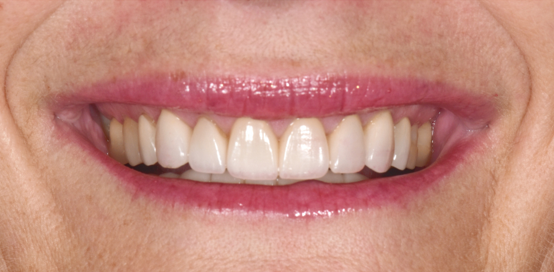
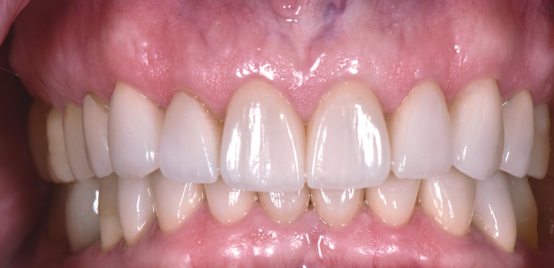
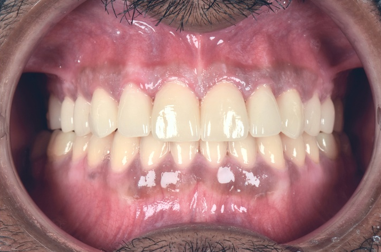
Julie's smile after full mouth rehabilitation, rebuilt with bonded lithium disilicate overlays and veneers
Approach Mostly additive

The PlanConservative & Additive

Why did Julie need all 28 teeth treated?

Because her bite had to open so far. Every tooth needed to meet in the new, tested position. Fixing teeth one at a time would have kept her in the old bite that caused the damage in the first place.

With the new bite confirmed, we took full records: digital scans, CBCT imaging and photos. I then designed her case digitally with a master ceramist and digital designer, building every tooth to the new position.

I also wanted to be as conservative as possible. Traditional crown work often means cutting teeth down. Most of Julie's plan built her teeth back up instead.

Back teeth

Bonded ceramic overlays, using adhesive and biomimetic principles that preserve natural tooth structure.

Front teeth

Conservative ceramic veneers, with crowns only where a tooth's structure called for it.

Gums

Julie wanted longer front teeth, so laser gum recontouring added the length she was after.

Materials, and why we chose them

Overlays & veneers

Lithium disilicate

It looks natural and bonds strongly to the tooth, so I could avoid heavy reduction.

Second molars & lower first molars

Zirconia

Used where her strong bite needed the extra rigidity.

Both were made by a master ceramist I work closely with.

Cosmetics weren't Julie's goal at first. That changed when she saw the digital preview. She realized she could have a bite that felt right and a smile she loved.

The ProcessAbout 2 Months

How long does full mouth rehabilitation take?

Julie's case took 8 visits in total, and only 3 of them were actual treatment. The rest were for records, diagnostics and walking through the plan together. From the start of treatment to completion took about two months, after a few weeks of testing her bite.

8 Total visits
3 Treatment visits
~2 Months of treatment
3 Weeks testing her bite

She test-drove her new smile first

Before any restorative work, Julie wore an acrylic trial smile set to her new bite. She checked comfort and appearance in her own mouth and gave input on shape and length. By her first treatment visit, she knew exactly what to expect.

Comfort for real dental anxiety

Julie has real dental anxiety, so we used oral conscious sedation for her treatment visits. Just as important for her comfort was knowing, from the deprogrammer and trial smile, that the plan was going to work.

How full mouth rehabilitation works at our office

Every case is different, but the steps always follow the same order. Julie's case moved through them like this.

  1. 01

    Consultation

    We start by understanding the problem: what you're experiencing, what you've tried and what you want to change.

  2. 02

    Diagnostic records

    Scans, photos, CBCT imaging and bite records, taken at the consult or at a dedicated visit.

  3. 03

    Plan and presentation

    I walk you through the treatment, the timeline, your financial options and what we each expect from the process.

  4. 04

    Trial smile and prototypes

    For complex cases, we design a trial smile with our master ceramists so you can test the look and bite before anything is permanent.

  5. 05

    Phased treatment

    Treatment is split into phases for your case. Some need implants, surgery or orthodontics first. Others are phased to make treatment easier on you.

  6. 06

    Delivery and fine-tuning

    We deliver the final work and check function, comfort and appearance. It may take a couple of short visits to dial in.

  7. 07

    Maintenance plan

    We finish with a plan built around your new smile, so it stays stable and healthy for the long term.

The Result1+ Year Later

What changed for Julie after full mouth rehab?

More than a year later, Julie reports no migraines, no headaches and no dental pain. The daytime clenching and nighttime grinding have stopped, and she has a smile she loves.

  • No migraines
  • No headaches
  • No dental pain
  • No more clenching or grinding

Hear Julie tell her story

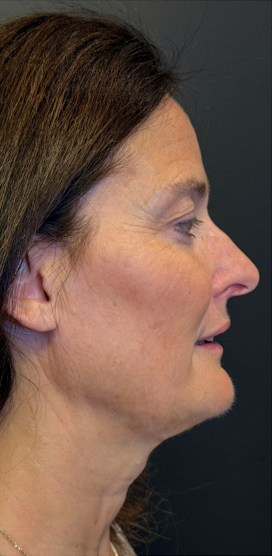
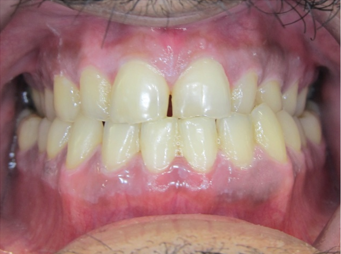
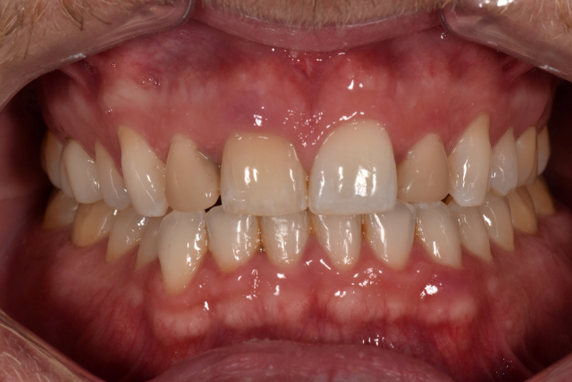
Julie before full mouth rehabilitation, side profile
Before
Julie after full mouth rehabilitation, Chanhassen MN, side profile with restored facial height
After

"Almost like a facelift without surgery"

The change that surprised Julie most was her face. Restoring her vertical height gave back fullness her face had lost over the years. She describes it as almost like a facelift without surgery.
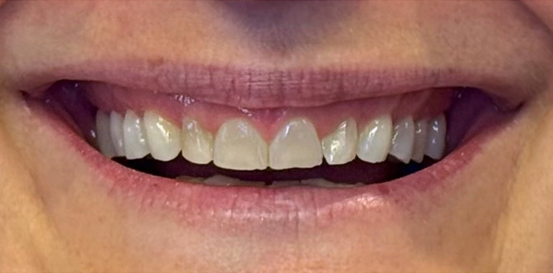
It's most striking in her side profile, where you can see the height her collapsed bite had taken away.

This truly had a profound impact on my day-to-day life. I had sort of given up on dental solutions to my issues after trying so many different options.
J Julie Full mouth rehabilitation patient, Chanhassen MN

Protecting the result

Patients put real emotional, physical and financial investment into a transformation like this, so protecting it matters as much as creating it. Julie's maintenance plan includes:

  • A protective night guard and retainer
  • Hygiene visits and exams every 4 months to monitor stability
  • Oral care products and a usage schedule chosen for her restorations

Every patient's plan is built around their own case.

Why this case means a lot to me

This treatment came together on Julie's timeline, once she trusted the process. It made a real difference for someone I work alongside every day.

Now when a patient on the phone describes the same years of grinding, headaches and patchwork repairs, Julie can tell them what it was actually like. Patients come to their first consult better informed and more at ease because of it.

Dr. Monil Mehta

Individual results vary. Every full mouth case starts with a thorough diagnosis.
Featured CasesBefore & After

Real results for worn teeth, bite problems and smile makeovers

Every case starts with a diagnosis, not a default treatment. Pick a case to see the full story: the problem, the plan, the process and the result.

Individual results vary. Every case starts with a thorough diagnosis.

FAQFull Mouth Rehab

Questions about full mouth rehabilitation

The questions patients ask most about TMJ pain, worn teeth, cost and what the process is actually like.

Still have questions? Call (952) 906-0200

We test before we treat. A deprogrammer lets your jaw settle into a stable position over a few weeks. If your symptoms improve, that position becomes the blueprint for your new teeth. Then you wear a trial smile to check comfort and appearance before any permanent work begins.

It can help a great deal when the pain comes from the bite. When worn or misaligned teeth hold the jaw joint in a strained position, correcting the bite can ease TMJ pain and the headaches and migraines that follow. It can't reverse joint damage that has gone too far, and it won't help pain with a neurological cause or pain caused by medications or other conditions. That's why we diagnose the cause before recommending treatment.

Often far less than people expect. When teeth are worn down, most of the work is adding back what was lost with bonded ceramics. Some teeth need more work than others, depending on old restorations or damage, and I'll show you which ones before we start.

Julie's case took 8 visits, 3 of them actual treatment, and about two months from start to finish. That came after a few weeks of testing her bite. Every case is different, and you'll get a timeline at your planning visit.

Every case is different, so the cost depends on your diagnosis and plan. Most full mouth cases involve at least one full arch of teeth, and many involve both. As a general guide, cases often fall between $20,000 and $45,000. When a case needs a specialist, such as an oral surgeon or orthodontist, their fees are separate. We're not the cheapest, and we're far from the most expensive. We offer several financing options and can phase treatment over time when that's clinically sound. A consultation is the way to get a real number for your situation.

Yes. You'll see a digital design first, then wear an acrylic trial smile in your own mouth. You can give feedback on shape, length and shade before anything permanent is made.

You may be a good candidate if you have:

  • Years of patchwork dentistry that keeps needing attention
  • Grinding or clenching that won't resolve
  • Teeth or a face that look shorter than they used to
  • Several worn, chipped or broken teeth
  • A bite that feels unstable, or like you have more than one bite
  • General unhappiness with how your bite or smile looks and works

It's not the right fit if you want a quick fix. This is a careful diagnostic and treatment process, and rushing it creates more problems than it solves.

About half of my continuing education goes to full mouth rehabilitation and the technology behind it. My training includes the Kois Institute, Spear Education, The Art of Ceramic, The Protocol and Implant Pathways. I also work closely with other specialists in the Twin Cities when a case calls for it.

Tired of patchwork repairs?

If you've spent years on splints, night guards and one-tooth-at-a-time repairs, a consultation is a low-pressure place to start. At the very least, you'll leave with a clear picture of what's going on and what your options are.

5.0 ★★★★★ 500+ Google reviews

What Our Patients Say

"While visiting family in Minnesota, I had a dental emergency and needed a crown. I was fortunate to find Dentistry on the Ponds in Chanhassen, and I truly can’t say enough good things about the experience. Dr. Mehta was incredibly thorough and patient, taking the time to explain every step and make sure I was comfortable. Despite the urgency, he treated me with the same care and attention as a long-time patient. ... The entire team at Dentistry on the Ponds was friendly and accommodating, and they got me in quickly even though I was just visiting from out of town. If you're looking for emergency dental care in Chanhassen or a truly skilled and compassionate dentist, I highly recommend Dr. Mehta and his team."
Deluxe Inn GMEmergency crown patient · Google review
"I had a great experience here! ... I came in for a filling and a cleaning this year, and both visits were quick, smooth, and surprisingly comfortable. Highly recommend!"
Caleb OlsonFilling and cleaning patient · Google review
"I’ve been going to dentistry on the pond for a while now and I’ve really enjoyed every visit. I’ve always been treated with kindness and everyone is always smiling. I can’t thank the team enough!"
Dunya MazharyGoogle review
"Super friendly staff and easy scheduling!"
Ethan BinderGoogle review

Request An Emergency Visit

Get Seen Today

Dealing with a toothache, broken tooth or other dental emergency? Dr. Monil Mehta and our team are here to help, whether or not you're a current patient.

Fill out the form and our team will reach out quickly to get you scheduled at 436 Pond Promenade in Chanhassen. For the fastest help, call (952) 906-0200.

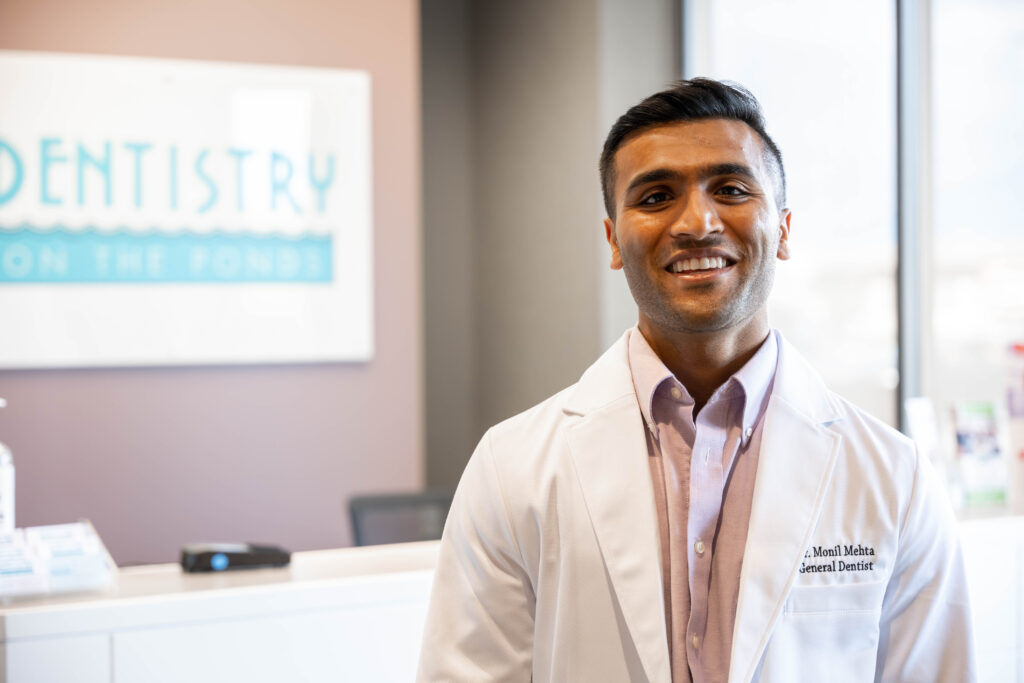
Meet Dr. Mehta

Dr. Monil Mehta is a University of Pittsburgh–trained dentist with advanced training in implants, clear aligners, and cosmetic dentistry. A key opinion leader for leading dental brands, he pairs clinical precision with an artist’s eye.

Scroll to Top