Case Study Full Mouth Rehab No Jaw Surgery

Full Mouth Rehab Case Study

Correcting a crossbite and acid erosion without jaw surgery

Falgun was told jaw surgery was the only way to fix his lifelong crossbite. Instead, Dr. Monil Mehta paired orthodontics with minimal-prep veneers and bonded overlays to rebuild his bite here in Chanhassen, MN.

Case SummaryChanhassen, MN

Can a crossbite be fixed without jaw surgery?

For Falgun, yes. His upper jaw is narrower than his lower jaw, which caused a crossbite on both sides. Acid reflux and grinding made the damage worse. We got his reflux under control, used orthodontics to move his teeth, then added height with bonded ceramics so his bite moved into a normal position. Every specialist he'd seen before said jaw surgery was the only option. He never needed it.

Treatment
Orthodontics, then full upper arch rehabilitation
Main issues
Bilateral crossbite, acid erosion from GERD, collapsed bite, grinding
Teeth treated
14 upper, 2 lower
Restorations
Minimal-prep lithium disilicate veneers (front), bonded zirconia overlays (upper back), 2 lower molar crowns
Team
Local orthodontist, plus his primary care physician for GERD
Timeline
About 18 months, including about 10 months of orthodontics
Comfort
Minimal oral conscious sedation for the prep visit
Completed
Early 2026
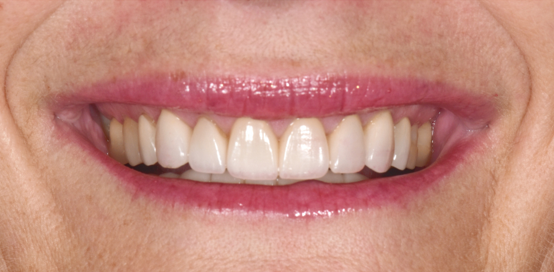
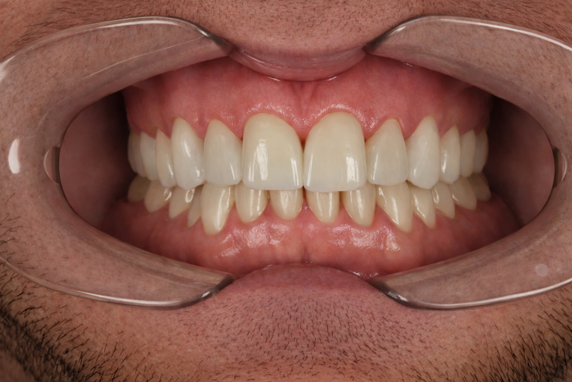
Falgun smiling after full mouth rehabilitation without jaw surgery at Dentistry on the Ponds, Chanhassen MN
0 Jaw surgeries needed

Falgun's StoryLifelong Crossbite

Told jaw surgery was his only option

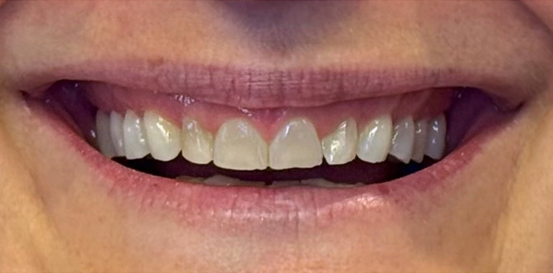
Falgun had lived with a difficult bite his whole life. His upper teeth sat inside his lower teeth on both sides, which is called a crossbite. Years of grinding had chipped and worn his teeth. Acid reflux was quietly eroding the backs of his upper teeth and left them sensitive to hot and cold.

He had tried to fix it before. Every orthodontic consult told him the same thing: the only way to correct his bite was jaw surgery followed by braces. With a busy career and young kids at home, that wasn't an option for him. So he wore a night guard and set the problem aside.

His wife and kids had recently become patients here and encouraged him to switch. When he cracked a lower molar, he came in for an emergency visit. Once that tooth was treated, we talked about the bigger picture.

I agreed that surgery and braces is the textbook way to correct his bite. But it isn't the only way to give someone a stable, comfortable bite that protects their teeth. So I built a plan around what he was willing to do, and took the time to explain how his jaw development, reflux and grinding were all connected.

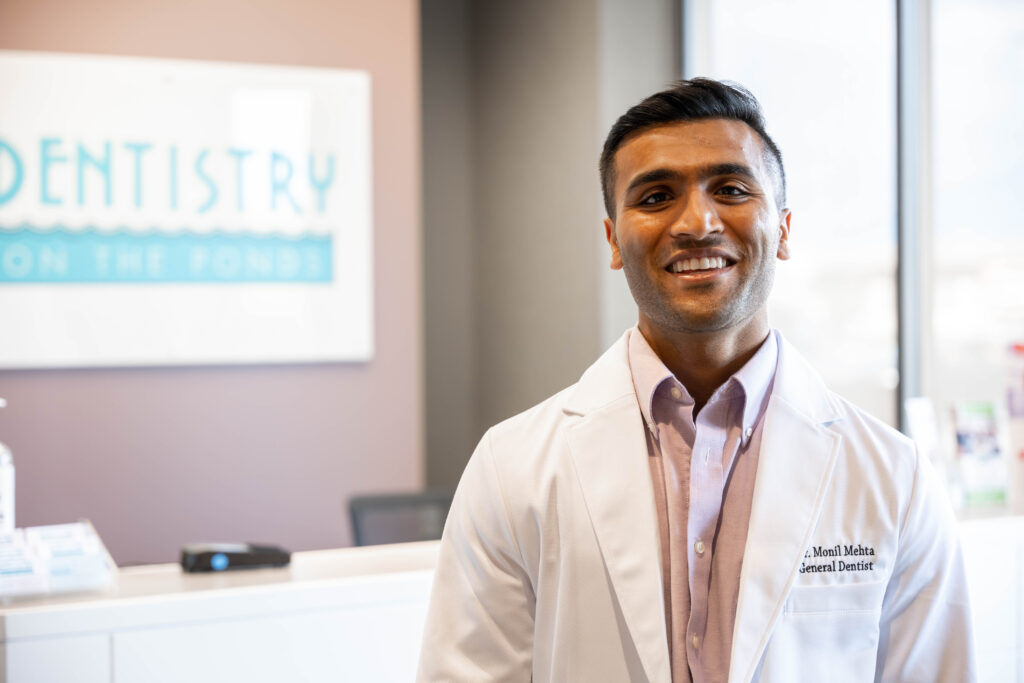
Dr. Monil Mehta

What mattered most to Falgun

  • No jaw surgery. It was a dealbreaker.
  • Nothing more invasive than it needed to be.
  • A plan that fit around work and family.
Now I understand. No one has taken the time to explain all of this before. They would tell me I needed to do this or that, but never why, or give me a couple of options to choose from. Now I feel comfortable moving forward.
Falgun, after his consultation

DiagnosisRoot Cause

What was causing Falgun's bite problems?

The root cause was developmental: his upper jaw is narrower than his lower jaw. Reflux and grinding then added to the damage. These three problems kept feeding each other, so fixing one tooth at a time would never have solved it.

01

A narrow upper jaw

Because his upper jaw is narrower than his lower jaw, his upper back teeth closed inside his lowers on both sides, which is a bilateral crossbite. His front teeth met edge to edge. A bite like this puts uneven, damaging force on the teeth.

02

Acid erosion from reflux

Uncontrolled acid reflux (GERD) had worn away the inner surfaces of his upper teeth, leaving them sensitive to hot and cold. As those teeth lost height, his bite collapsed even further.

03

Nighttime grinding

The unstable bite led to grinding at night, which chipped and wore his teeth even more. His lower first molars took the most damage, and one of them cracked.

A cycle that kept feeding itself. The crossbite stressed his teeth, reflux shortened them, and the collapsing bite drove more grinding. Breaking that cycle took a full plan, starting with his health.

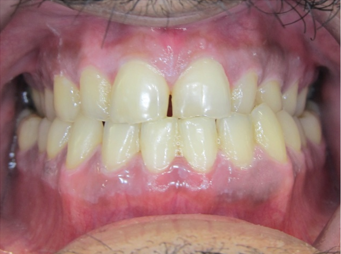
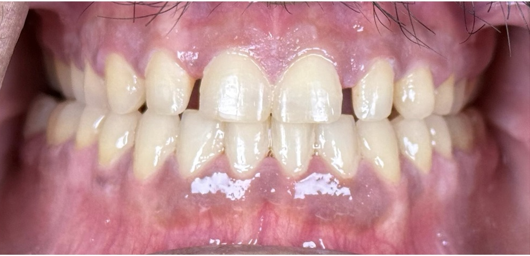
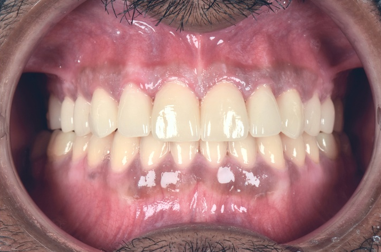
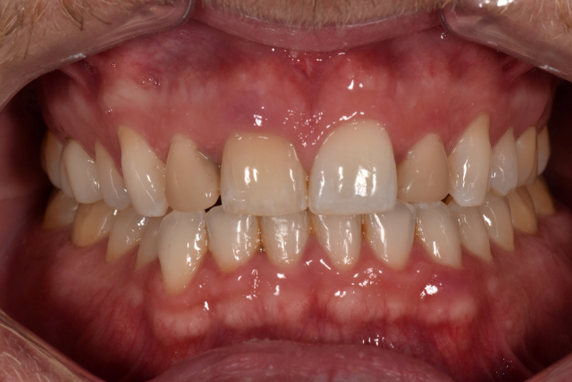
Falgun's teeth after orthodontics, with small planned spaces left for minimal-prep veneers
Ortho phase ~10 months

The PlanOrtho + Restorative

How do you fix a crossbite without jaw surgery?

The ideal correction for Falgun's bite was jaw surgery, or a bone-anchored jaw expander (MARPE). He didn't want either. So I combined two disciplines, each doing the part it does best, to reach a stable, comfortable bite another way.

  1. 1

    Health first: control the reflux

    I worked with Falgun's primary care physician, who managed his reflux with medication and lifestyle changes. Restoring teeth while acid is still eroding them only moves the damage to new surfaces.

  2. 2

    Orthodontics to set up the bite

    A local orthodontist brought his back teeth to an edge-to-edge position, reduced the crossbite as far as moving teeth alone could, and set every tooth up for the restorative phase.

  3. 3

    Bonded ceramics to open the bite

    Adding height to his upper back teeth let his bite move past the remaining crossbite into a normal position. It also gave his front teeth room for minimal-prep veneers.

Planned before he committed. A digital orthodontic simulation showed how close braces could get his bite. I designed the restorations around that position, so the orthodontist and I worked toward the same result from day one.

Why not just restore all 28 teeth instead?

We could have skipped orthodontics and rebuilt both arches to correct his bite in one go. But that would have meant preparing all 28 teeth. Moving the teeth first put them in a much better natural position, so the restorative work could be mostly additive and most of his natural tooth structure stayed intact.

Minimal PrepTooth Preservation

How conservative was Falgun's treatment?

Very conservative. His lower arch was left almost untouched, and most of his upper teeth needed little to no reduction. Because orthodontics moved his teeth into position first, most of the ceramic work was added onto his teeth instead of cutting them down.

Almost untouched

Lower arch

Left untouched except the two first molars, which were worn too deeply for anything but crowns.

Little to no reduction

Upper back teeth

Bonded overlays added the height his bite had lost, with little to no tooth reduction.

Minimal to no prep

Upper front teeth

His orthodontist finished these teeth with small planned spaces, so the veneers could close the gaps with minimal to no preparation.

That level of coordination took a lot of discussion and planning with the orthodontist up front. It's what made such a conservative result possible.

Materials, and why we chose them

Front veneers

Lithium disilicate

Chosen for its natural look and its strong bond to tooth structure, which matters when veneers are this thin.

Upper back overlays & lower molar crowns

Zirconia

Chosen for the strength his bite and history of grinding demand on the teeth that do the heavy chewing.

The Process8 Steps

How long did Falgun's treatment take, step by step?

About a year and a half from start to finish. Most of that was orthodontics, which can't be rushed. The restorative phase itself took only a few visits. The longer timeline is what let us keep so much of his natural teeth. It was designed as a long-term solution, not a quick fix.

~18 Months total
~10 Months of orthodontics
3 Weeks testing his new bite
0 Surprises mid-treatment
  1. Planning 01

    Consultation and records

    Exam, digital scans, photos and bite records.

  2. Planning 02

    Case planning and presentation

    I mapped the full plan, including the orthodontic target, and walked Falgun through his options.

  3. Orthodontics 03

    Orthodontics begins

    The orthodontist started moving his teeth toward the positions we had planned together.

  4. Orthodontics 04

    Orthodontic phase

    Regular visits over about 10 months to finish tooth movement.

  5. Restorative 05

    Verification and design

    New scans confirmed his teeth were where we needed them, and the digital design began.

  6. Restorative 06

    Trial smile

    Falgun test-drove the bite opening and the final look before any preparation.

  7. Restorative 07

    Preparation visit

    Teeth were shaped for bonding under minimal oral conscious sedation. He then lived with his new bite in temporaries for 3 weeks.

  8. Restorative 08

    Final delivery

    Upper back overlays, upper front veneers and the two lower molar crowns were bonded in place.

Everything went to plan, with no surprises. That was the point of the planning: decisions that usually get made mid-treatment were made at the start.

The ResultFunction First

What changed for Falgun after treatment?

His reflux is under control, he no longer reports grinding or clenching, and chewing is comfortable again. His teeth are no longer breaking down, which is what he came in for.

  • Reflux under control
  • No more grinding or clenching
  • Comfortable chewing
  • Teeth no longer breaking down
I must have gotten used to my old bite. I had no idea my bite could feel this comfortable.
Falgun
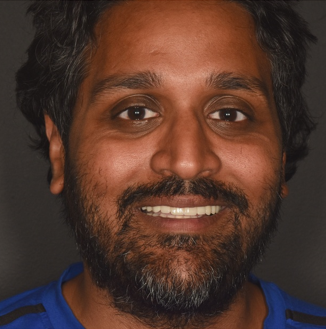
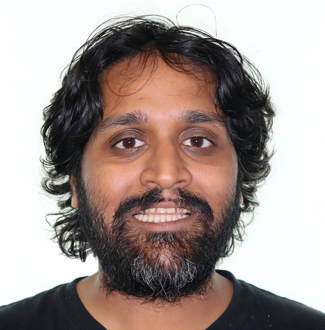
Falgun before treatment with a full beard partly hiding his smile
Before
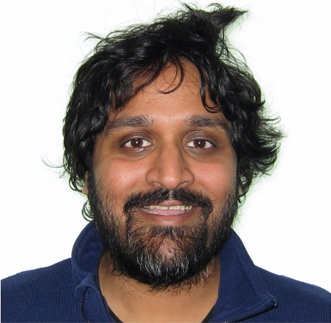
Falgun after full mouth rehabilitation with a trimmed beard and a longer, fuller face
After

A change he didn't expect

Falgun didn't do this for looks, but the change surprised him. For years he kept a full beard, and he now thinks he grew it partly to hide his smile. Since finishing, he has changed his haircut and trimmed his beard to a more refined look.

His wife noticed his face looks longer and fuller. That comes from restoring the height his collapsed bite had lost.

I never knew my bite or smile could feel or look this way. I had given up on fixing it, because surgery was something I couldn't stomach. This treatment gave me a new lease on not only my dental health, but my overall health and confidence.
F Falgun Full mouth rehabilitation patient, Chanhassen MN

Why this case means a lot to me

Falgun wanted to avoid jaw surgery. I wanted to show how far minimal-prep restorative dentistry can go with careful planning and close teamwork with an orthodontist. This plan let us both reach our goals.

Dr. Monil Mehta

Protecting the result

  • Lower retainer to hold the orthodontic result
  • Upper night guard to protect his ceramics
  • Regular hygiene visits and exams so we can monitor his bite over time

Individual results vary. Some bite problems do require jaw surgery, and a thorough diagnosis is the only way to know your options.

Featured CasesBefore & After

Real results for worn teeth, bite problems and smile makeovers

Every case starts with a diagnosis, not a default treatment. Pick a case to see the full story: the problem, the plan, the process and the result.

Individual results vary. Every case starts with a thorough diagnosis.

FAQCrossbite & Full Mouth Rehab

Questions about fixing a bite without jaw surgery

The questions patients ask most when they're facing a crossbite, acid erosion or a recommendation for jaw surgery.

Still have questions? Call (952) 906-0200

Sometimes. When a crossbite comes from the jaws themselves, surgery is the most complete correction. For some adults, combining orthodontics with restorative dentistry can reach a stable, comfortable bite without it. It depends on how severe the jaw difference is, the condition of the teeth and your goals. A careful diagnosis tells you which options are realistic for you.

Yes. Stomach acid from reflux (GERD) dissolves enamel, usually on the inner surfaces of the upper teeth first. Signs include sensitivity to hot and cold, teeth that look thinner or shorter, and edges that chip easily. The first step is getting the reflux managed with your physician. Restoring teeth while erosion is still active only moves the damage elsewhere.

Moving the teeth first puts them in a better starting position, so the restorations can be mostly additive. That means less drilling and more of your natural teeth preserved. The orthodontist and I plan the finish together, sometimes leaving small spaces on purpose so veneers can fill them with little or no preparation.

Most of that time was orthodontics, which can't be rushed. The restorative phase itself took only a few visits. The longer timeline is what allowed such a conservative result.

It depends on the case. Full mouth rehabilitation often falls between $20,000 and $45,000. When a case includes orthodontics or another specialist, their fees are separate. We offer several financing options and can phase treatment over time. A consultation is the way to get a real number for your situation.

A second opinion is reasonable for any major treatment. Surgery is sometimes the right answer, and a good consult will tell you so. But if surgery is a dealbreaker for you, it's worth asking what other options exist and what each one can and can't achieve.

Told surgery is your only option?

If you've been told jaw surgery is the only fix, or reflux and grinding have been wearing your teeth down, a consultation is a good place to start. You'll leave understanding what's causing the problem and what your real options are.

5.0 ★★★★★ 500+ Google reviews

What Our Patients Say

"While visiting family in Minnesota, I had a dental emergency and needed a crown. I was fortunate to find Dentistry on the Ponds in Chanhassen, and I truly can’t say enough good things about the experience. Dr. Mehta was incredibly thorough and patient, taking the time to explain every step and make sure I was comfortable. Despite the urgency, he treated me with the same care and attention as a long-time patient. ... The entire team at Dentistry on the Ponds was friendly and accommodating, and they got me in quickly even though I was just visiting from out of town. If you're looking for emergency dental care in Chanhassen or a truly skilled and compassionate dentist, I highly recommend Dr. Mehta and his team."
Deluxe Inn GMEmergency crown patient · Google review
"I had a great experience here! ... I came in for a filling and a cleaning this year, and both visits were quick, smooth, and surprisingly comfortable. Highly recommend!"
Caleb OlsonFilling and cleaning patient · Google review
"I’ve been going to dentistry on the pond for a while now and I’ve really enjoyed every visit. I’ve always been treated with kindness and everyone is always smiling. I can’t thank the team enough!"
Dunya MazharyGoogle review
"Super friendly staff and easy scheduling!"
Ethan BinderGoogle review

Request An Emergency Visit

Get Seen Today

Dealing with a toothache, broken tooth or other dental emergency? Dr. Monil Mehta and our team are here to help, whether or not you're a current patient.

Fill out the form and our team will reach out quickly to get you scheduled at 436 Pond Promenade in Chanhassen. For the fastest help, call (952) 906-0200.

Meet Dr. Mehta

Dr. Monil Mehta is a University of Pittsburgh–trained dentist with advanced training in implants, clear aligners, and cosmetic dentistry. A key opinion leader for leading dental brands, he pairs clinical precision with an artist’s eye.

Scroll to Top